
What is a transportation management system (TMS)?
A transportation management system (TMS) is software that helps freight forwarders plan, execute, and track the movement of shipments from one platform, replacing manual order processing, disconnected tracking, and paper-based documentation. For freight forwarders specifically, a TMS usually covers order management, real-time shipment tracking, document generation, customs compliance, and reporting in one system.
What are the main benefits of a TMS?

Four of the benefits that come up consistently for freight forwarders:
Streamlined operations: shipment management, document generation, and compliance checks
Better customer experience: real-time tracking, accurate pricing, and self-service booking
Improved compliance: automated validation against customs requirements across countries
Scalability: resource allocation, geographic expansion, and data-driven decisions that scale with the business
Benefit 1: Streamlined operations and efficiency
- Shipment management: shipment requests are processed, consolidated, and dispatched automatically instead of tracked manually across emails and spreadsheets
- Real-time automation: shipment tracking, document generation, and compliance checks run without manual re-entry, cutting the errors and delays that come with doing it by hand
- Documentation: bills of lading, customs forms, and commercial invoices generate from shipment data directly, rather than being typed from scratch for every job
Benefit 2: A better customer experience
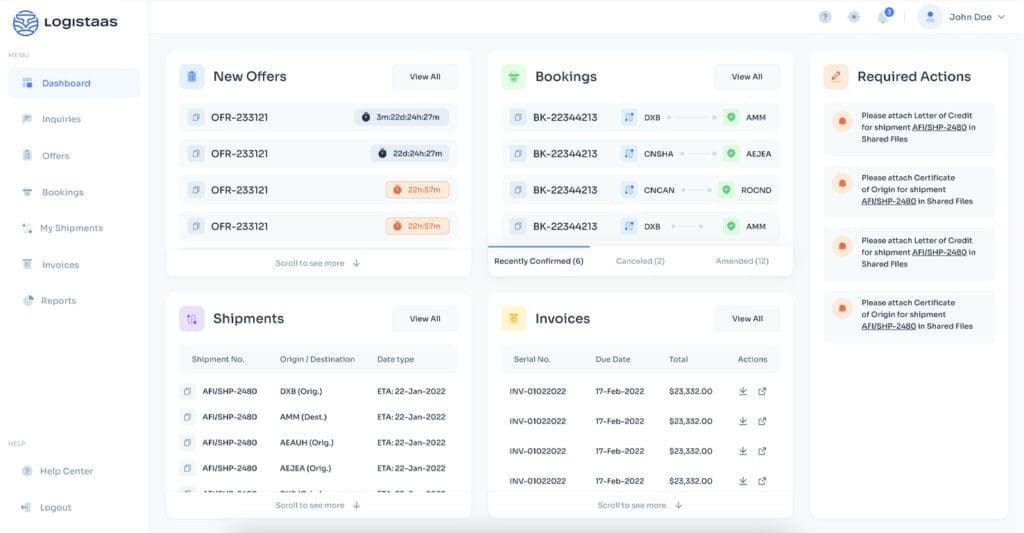
- Real-time tracking lets shippers and consignees see shipment status themselves instead of emailing for updates, which is most of what a “Where is my cargo?” inbox is made of
- Accurate, consistent pricing comes from rate data and shipment history rather than manual quoting, which builds trust with repeat customers
- Self-service booking through a customer portal means customers can book, track, and manage shipments without a phone call
A branded customer portal is the clearest expression of this: customers get real-time access to offers, shipments, and invoices, and forwarders get fewer status-check emails and more time for actual operations work.
Benefit 3: Improved compliance

Customs regulations vary by country and change often. A TMS with direct integrations into customs authorities and tax systems validates shipments against local requirements automatically, which is what actually prevents the delays and penalties that come from manual filing errors, not just faster paperwork.
This matters most for forwarders operating across multiple regions: the more countries you touch, the more manual compliance work a TMS removes. Direct integrations with customs and e-invoicing authorities (not just generic document templates) are the difference between “compliant” and “compliant most of the time.”
Benefit 4: Scalability and growth

- Geographic expansion: a TMS built for multi-country operations adapts to local regulations, customs requirements, and carrier preferences as you enter new markets, instead of requiring a rebuild
- Data-driven decisions: historical shipment data and KPIs inform capacity planning and route optimization, rather than guesswork
Forwarders can add users and open up in new regions as they grow — without a system rebuild or downtime, instead of paying for enterprise complexity from day one.
An emerging fifth benefit: AI-assisted operations
As of 2026, AI is showing up inside TMS platforms directly rather than as a bolt-on: demand forecasting, automated document data extraction, and compliance checks run against internal company policy before a shipment moves. Worth asking any vendor whether AI features are native to the platform or a separate add-on.
What to look for when choosing a TMS
- Integration depth with the carriers, customs authorities, and accounting systems you already use
- Multi-country compliance if you operate across regions, local tax and e-invoicing requirements should be built in, not custom work
- Security certification (SOC2 or equivalent) as a baseline, given the shipment and financial data a TMS holds
- Realistic implementation timeline, weeks versus months matters more than feature-list length
FAQ
What’s the difference between a TMS and freight forwarding software? They are usually the same thing.
Does a TMS help with customs compliance? Yes, a TMS with direct integrations into customs and tax authorities validates shipments against local requirements automatically, reducing manual filing errors and the delays that come with them.
Can a small forwarder benefit from a TMS, or is it only for enterprises? Both. Smaller forwarders often see the most immediate relative gain, since they’re typically replacing spreadsheets and email rather than an existing (if outdated) system.
How does a TMS improve customer satisfaction specifically? Mainly through real-time tracking and self-service booking, customers get shipment visibility themselves instead of needing to contact the forwarder for status updates.
Is TMS pricing usually per user or per shipment? Both models exist. Per-user pricing (with unlimited shipments) is generally more predictable for growing forwarders, since the bill doesn’t scale with shipment volume.
Wanna try for yourself? Book a demo with Logistaas and reap the benefits