
For many freight forwarders, the Transportation Management System (TMS) is the operational backbone of the entire company.
It manages shipments, client communication, pricing, financial records, documentation, and daily workflows. When a TMS provider shuts down, gets acquired, or simply stops innovating, the consequences can be serious. Operations slow down, data becomes vulnerable, and teams are forced to work around unstable systems.
The reality is simple: when the system running your freight operations becomes unreliable, your business is exposed.
But migrating to a new TMS does not have to be chaotic.
Logistaas was designed to help freight forwarders transition safely, without operational disruption, while modernizing the way they manage shipments, customers, and financial processes.
Today, freight forwarders in 80+ countries use Logistaas as a modern cloud-based platform to manage their operations, automate workflows, and build fully connected logistics businesses.
This article explains how the Logistaas migration and onboarding process works, and how freight forwarders can switch systems without putting their operations at risk.
Why TMS Migration Becomes Necessary

Many freight forwarders only consider switching systems when they are forced to.
Common triggers include:
A TMS provider shutting down operations
System acquisition leading to pricing or support changes
Legacy platforms that stop receiving updates
Limited integrations and manual workflows
Poor support or outdated user experience
When any of these happen, the system that once supported the business becomes a bottleneck.
The challenge is that a TMS touches nearly every part of a freight forwarder’s workflow:
Shipment management
Pricing and quotations
Accounting and financial reporting
Customer communication
Documentation and compliance
Migrating all of this data and operational logic to a new platform requires careful planning.
This is exactly where the Logistaas migration framework comes in.
A Structured Migration Process, Not a Sudden Switch

One of the biggest fears freight forwarders have when switching systems is downtime.
The Logistaas onboarding process is designed to prevent that.
Instead of forcing companies into an abrupt change, the transition follows a structured onboarding roadmap that allows operations to continue running while the new system is prepared.
The process typically includes:
A defined onboarding roadmap
Dedicated transition specialists
Parallel system preparation before go-live
Controlled activation instead of sudden cut-offs
During this stage, the Logistaas environment is configured to match the company’s operational workflows. Sales, operations, finance, and customer communication processes are mapped before the system becomes fully active.
This ensures teams are not forced to adapt overnight.
Operations continue normally while the new platform is gradually introduced.
Training Designed Around Your Operations

Adopting a new TMS should make teams more efficient, not create confusion.
Logistaas training is structured around how freight forwarders actually work.
Instead of generic tutorials, onboarding sessions are customized based on the company’s processes and operational structure.
Training includes:
Customized training sessions tailored to company workflows
Hands-on system access from the beginning
Progress reviews and Q&A sessions with implementation specialists
Many companies prefer to start with test environments using dummy data.
This allows teams to explore the system, simulate shipments, and understand the workflows before switching to live operations.
By the time the system goes live, teams are already comfortable with the platform.
Migrating Operational Data Safely

Data migration is usually the most sensitive part of a system transition.
Freight forwarders typically store years of operational and financial data in their existing systems. Losing that information is not an option.
The Logistaas onboarding team assists companies with migrating essential operational records, including:
Clients, agents, and subcontractors
Tariff structures and rate sheets
In-progress shipments
Historical shipments
Financial structures including costs, revenue items, and taxes
Instead of asking internal teams to manually rebuild their database, the Logistaas team handles the migration process.
This reduces errors, protects operational continuity, and ensures teams can continue working with familiar data inside the new system.
Moving to a Fully Connected Platform

Many freight forwarders operate with fragmented tools.
One system manages shipments. Another handles accounting. Customer communication happens through email threads or spreadsheets.
This fragmentation slows down operations and increases the risk of data inconsistencies.
Logistaas addresses this by bringing freight operations into one unified platform.
The system connects:
Sales and quotation management
Shipment operations
Financial accounting
Customer communication
Document management
For example, the native accounting module allows freight forwarders to manage invoices, payments, and financial reports directly inside the platform without relying on separate systems.
Logistaas also integrates with major logistics and financial platforms such as INTTRA, Traxon CargoHUB, WebCargo, Avalara, Wakeo, and XE.com, allowing forwarders to automate booking, visibility, invoicing, and exchange rate management.
The result is a connected operational environment where information flows automatically between departments.
A Digital Freight Forwarding Environment
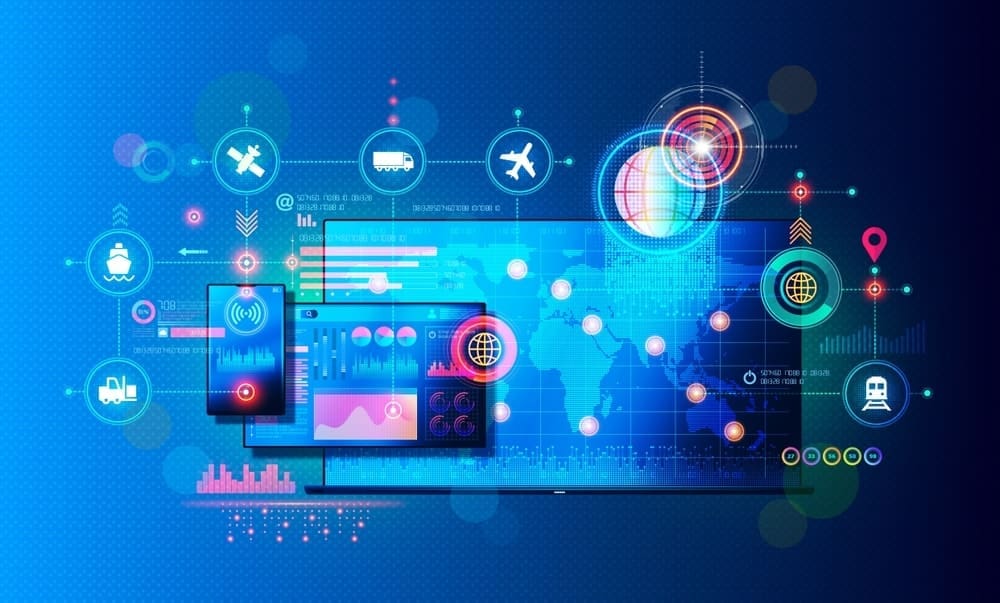
The goal of migrating to Logistaas is not only to replace an old system.
It is to move toward a digital freight forwarding model where operations, data, and customer communication are fully connected.
A digital freight forwarder operates on integrated systems where:
Pricing, bookings, documentation, and invoicing are linked
Shipment updates are visible in real time
Customers access their shipments and documents through online portals
Teams work with one centralized source of operational data
Logistaas enables this model through a unified platform and a customer portal that allows clients to track shipments, manage documents, submit booking requests, and view invoices online.
Instead of chasing updates through emails or spreadsheets, forwarders and their clients work through one connected system.
Continuous Support During and After Migration

System transitions are rarely a one-time event.
After implementation, teams continue refining workflows and discovering new ways to use the platform.
Logistaas provides ongoing support through multiple channels, including:
Direct calls
Email support
Chat communication
Customer success guidance
The goal is simple: ensure freight forwarders can continue operating efficiently while expanding their digital capabilities.
When Should You Start Planning a TMS Migration?

Many freight forwarders wait until their current system becomes unstable before considering a switch.
By that point, the transition becomes urgent and stressful.
The smarter approach is to start planning early.
If your current TMS is:
Being discontinued
Acquired or changing direction
Becoming outdated or unsupported
then preparing a transition plan now can prevent future operational disruption.
A structured migration ensures your data remains secure, your team adapts smoothly, and your operations continue without interruption.
The Bottom Line
Switching a TMS is one of the most important operational decisions a freight forwarder can make.
But with the right process, it does not have to be risky.
The Logistaas migration framework combines structured onboarding, guided data migration, tailored training, and continuous support to ensure freight forwarders transition safely to a modern, connected platform.
Instead of reacting to system failures, forwarders can proactively upgrade their operations and move toward a more digital, scalable logistics environment.
If your current TMS is closing or becoming unreliable, the best time to start planning the transition is before disruption begins.
Request a demo of Logistaas and explore how the migration process works.