
The freight forwarding industry is evolving at a pace never seen before. Customer expectations are higher, margins are tighter, and teams are under pressure to move faster, communicate better, and deliver more accuracy with fewer resources.
Yet despite all this, many freight forwarders are still operating on legacy TMS systems built years ago, often decades ago, platforms that were originally designed for structured, predictable environments, focusing on basic functions like shipment tracking and carrier selection. These systems were never designed for the speed, complexity, and digital demands of 2025.
And the truth is simple: You can’t compete in a modern freight forwarding world using outdated tools.
This article breaks down why legacy TMS platforms fall behind, why the cost doesn’t match the effectiveness, and why forwarders are switching to Logistaas, a modern, cloud-native system built specifically for freight forwarding.
The Legacy TMS Problem: Old Architecture, High Cost, Low Efficiency

Most legacy TMS solutions were built in another era, and it shows. Legacy transport management systems are costing companies more than they might think, and the longer you delay switching, the more invisible costs slowly creep up.
Sticking with outdated processes isn’t just inefficient, it’s a direct threat to profitability and competitiveness. Relying on manual processes in legacy TMS leads to increased costs, unnecessary spending, and a higher risk of errors due to manual data entry and reconciliation.
Here’s what we consistently hear from freight forwarders using these older systems:
Legacy TMS incurs hidden costs from inefficiencies, including hours wasted retyping data and delayed invoices.
Manual processes and manual workflows result in operational errors, delays, and additional spending that impact overall profitability.
The hidden costs of legacy systems can significantly affect competitiveness and long-term financial health.
1. Expensive Pricing Models
Many legacy platforms come with:
high subscription fees
separate charges for basic modules
maintenance fees for features that should be standard
You end up paying enterprise-level prices for tools you barely use.
2. Complex Workflows That Slow Teams Down
Legacy systems often introduce a level of complexity that drains time and energy:
long menu paths
multiple screens for one task
cluttered UIs
outdated design
slow response times
complicated shipment creation steps
This complexity kills productivity, especially for fast-moving teams. Growing your business shouldn’t mean hiring more admin staff, but that’s exactly the burden legacy systems create due to their reliance on manual processes, which lead to workflow bottlenecks and inefficiencies.
3. Heavy Training
Some legacy TMS solutions often feature archaic or outdated user interfaces that require extensive training for users, forcing employees to go through long training cycles just to perform basic tasks.
A modern TMS should empower, not overwhelm.
If your system requires long onboarding and training due to a complex user interface for everyday actions, it’s not built for operational agility.
4. Outdated Technology Stack
Legacy platforms often rely on old architectures that can’t keep up with modern logistics needs:
slow interfaces
heavy page reloads
limited automation
minimal AI capabilities
slow iteration cycles
Many legacy TMS depend on manual inputs and manual processes, relying on predefined rules that limit adaptability in volatile conditions. These systems are inherently reactive, which amplifies the effects of disruptions.
This leads to systems that feel stuck in time while your competitors move forward.
5. Slow Innovation
Many traditional TMS providers release updates infrequently, and when they do, they tend to be “maintenance updates” rather than true improvements.
Meanwhile, logistics companies need:
automation
real-time visibility
modern integrations
fast and intuitive workflows
customizable structures
Legacy systems simply weren’t built for today’s pace.
Enter Logistaas: A Modern TMS Built for Freight Forwarders
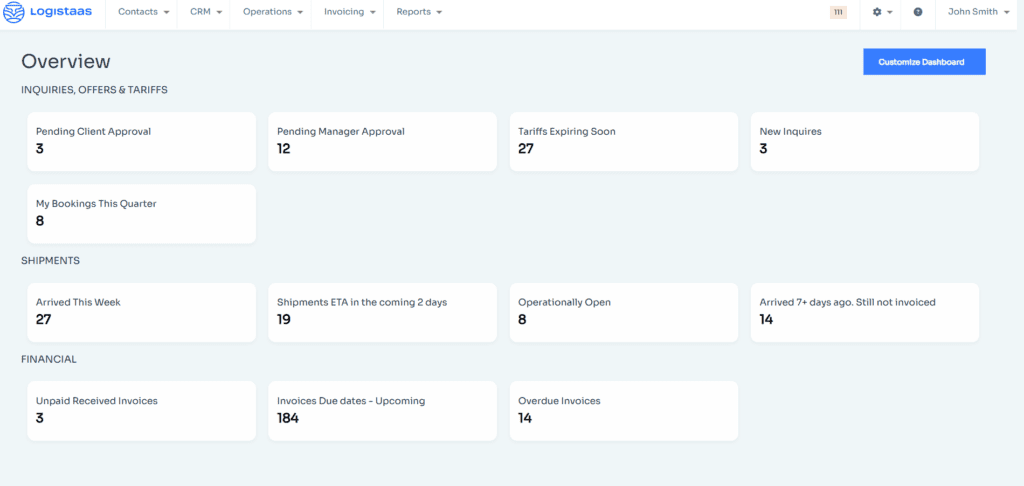
Logistaas was created with a different philosophy: simplicity, speed, innovation, and real-world practicality.
Instead of forcing users to adapt to old workflows, the system adapts to you.
Here’s how Logistaas delivers value where legacy systems fall behind:
1. Modern Cloud-Native Architecture
Logistaas is built on technology designed for 2025:
fast loading
smooth interface
responsive design
minimal clicks
real-time syncing
secure cloud hosting
This means your team can run workflows quickly, without lag, frustration, or waiting.
2. Transparent, Fair Pricing
Unlike legacy systems with complicated add-ons, Logistaas offers:
straightforward pricing
no hidden fees
flexible plans for growing companies
You get modern performance without enterprise-level pricing traps.
3. A Clean, Intuitive Interface
Logistaas is intentionally designed to be simple:
no overwhelming screens
no nested menus
no clutter
no confusing logic
no training-heavy requirements
Most teams can use Logistaas on day one, without long onboarding cycles.
4. Built Specifically for Freight Forwarding
Logistaas isn’t a generic supply chain platform. It was built from the ground up for freight forwarders.
This means every module, operations, accounting, CRM, portals, reporting, reflects real forwarding workflows.
5. Full Workflow Connectivity
Logistaas connects the entire shipment lifecycle:
pricing & quotes
bookings
operations
customer visibility
document management
cost control
invoicing
accounting
CRM
automation
integrations
No switching between systems. No double entry. No fragmented workflows.
6. Truly Global Functionality
Logistaas supports teams in 75+ countries, offering:
13 languages
local taxation
e-invoicing integrations
multi-company + multi-branch structures
flexible, global operations
And your customers benefit from a powerful customer portal that cuts down emails, and follow-ups.
7. Continuous Innovation
Logistaas delivers hundreds of updates every year:
new features
UX improvements
integrations
reliability upgrades
AI enhancements
This pace of innovation ensures your TMS grows with your business, not behind it.
Why Forwarders Are Switching from Legacy Platforms to Logistaas

Companies choose Logistaas because it offers:
Modern UI
Cloud-native speed
Fair pricing
Practical automation
Easy onboarding
Powerful visibility (customer portal)
Global features
Reliable support
Real innovation
A system tailored to freight forwarding
Legacy systems had their time. Today, forwarders need tools that are faster, simpler, smarter, and more cost-effective.
The Future Belongs to Forwarders Who Move Fast
If your current TMS feels slow, heavy, outdated, or overpriced, it may be holding your business back.
Logistaas gives freight forwarders the modern edge they need, without the complexity, cost, or limitations of legacy solutions.
To explore how Logistaas can transform your operations, book a demo or speak with our team.