
Shippers today don’t benchmark you against other freight forwarders. They compare your service to the digital experiences they deal with every day, fast, transparent, and accessible. That shift has quietly redefined what “good service” means in logistics.
If your operations still depend on emails, manual updates, and disconnected tools, the gap is already there.
Real-Time Visibility
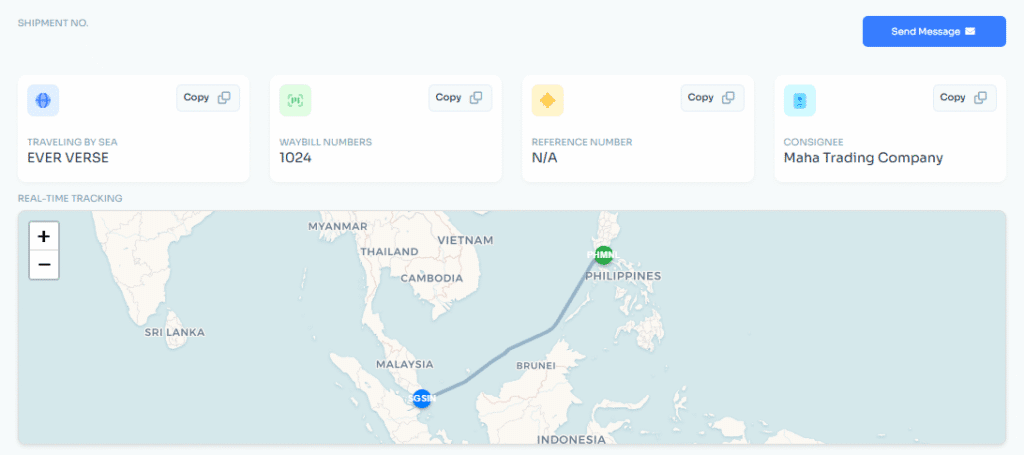
Visibility is no longer a value-add. It’s expected.
Shippers want to see exactly where their cargo is, what’s happening with it, and when it will arrive, without asking. Modern visibility platforms already pull data from carriers, ports, and multiple sources into a single view, providing accurate updates and alerts in real time .
When a customer needs to send an email just to check a shipment status, the experience feels outdated immediately.
Self-Service Access
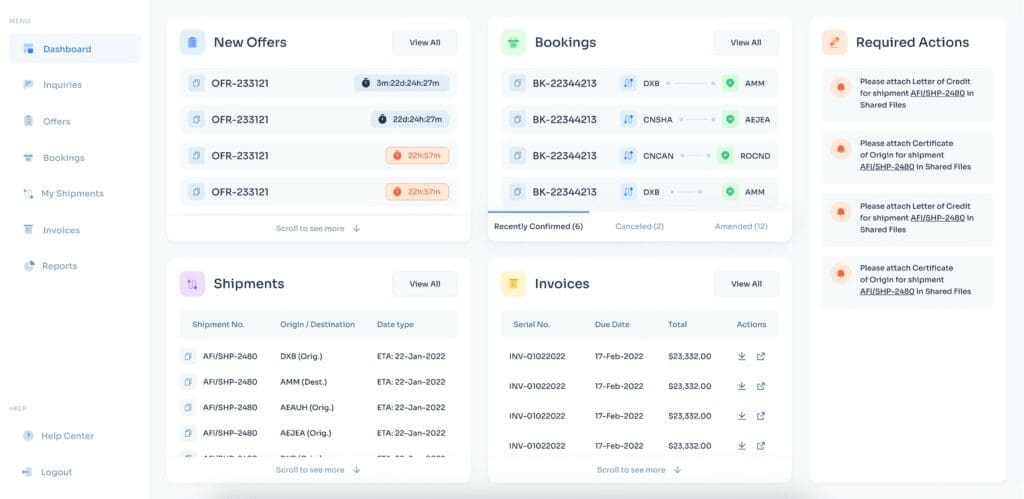
Access has replaced communication.
Instead of asking for updates, documents, or invoices, shippers expect to find everything themselves in a structured, reliable environment. A centralized customer portal allows them to review shipments, download documents, check financials, and even request bookings without depending on someone to respond.
This shift doesn’t just improve experience, it removes delays and reduces operational pressure. It’s one of the core differences between manual operations and digital freight forwarding, where everything is accessible online and connected in one place.
Speed in Quoting and Booking

Speed has become a competitive advantage.
Shippers expect quick responses, clear pricing, and the ability to move from inquiry to booking without unnecessary back-and-forth. When pricing is scattered across emails and spreadsheets, response times slow down. When it’s centralized and structured, quoting becomes faster and more consistent.
In practice, the forwarder who replies first, clearly and confidently, often wins the business.
Proactive Communication

Communication has shifted from reactive to proactive.
Shippers no longer want to be informed after something goes wrong. They expect to be notified as soon as a delay, change, or issue is detected. This is where automated alerts and real-time updates become critical, keeping all stakeholders informed without manual follow-ups.
When communication depends on someone noticing a problem and sending an email, it’s already too late.
One Connected Workflow

From the client’s perspective, everything should feel consistent. Quotes, bookings, shipments, and invoices should all align without contradictions or repeated information.
This only works when sales, operations, and finance are connected within the same system. A unified workflow reduces duplication, avoids errors, and ensures that data remains accurate across every stage of the shipment lifecycle .
When systems are disconnected, the issues may be internal, but the impact is always visible to the customer.
Financial Transparency

Financial visibility has become part of the service.
Shippers expect to access invoices, track payments, and understand costs without delays. Waiting for finance teams to send documents manually creates friction and slows down decision-making.
Modern systems make this information available instantly, allowing clients to manage their financial interactions with the same level of control as their shipments.
The Shift to a Digital Experience
The expectation is no longer limited to moving cargo efficiently. It now includes how information is delivered, how quickly actions can be taken, and how much control the customer has throughout the process.
A digital freight forwarder operates with connected systems, automated workflows, and real-time data. Information flows without manual intervention, and operations scale without increasing complexity .
This is no longer a future state. It’s already the benchmark.
Bottom Line
Modern shippers expect a service that is fast, transparent, and accessible at all times. These expectations are not driven by logistics competitors, but by every other digital experience they interact with daily.
Forwarders that adapt to this shift will operate more efficiently and retain stronger client relationships. Those that don’t will find it increasingly difficult to keep up.